


 Rouvres, Kirche - Buntglasfenster
Klicken Sie auf das Bild, um es im Vollbildmodus anzuzeigen.
Dieses Buntglasfenster mit seinem geometrischen und modernen Stil hebt das Mysterium der Eucharistie hervor.
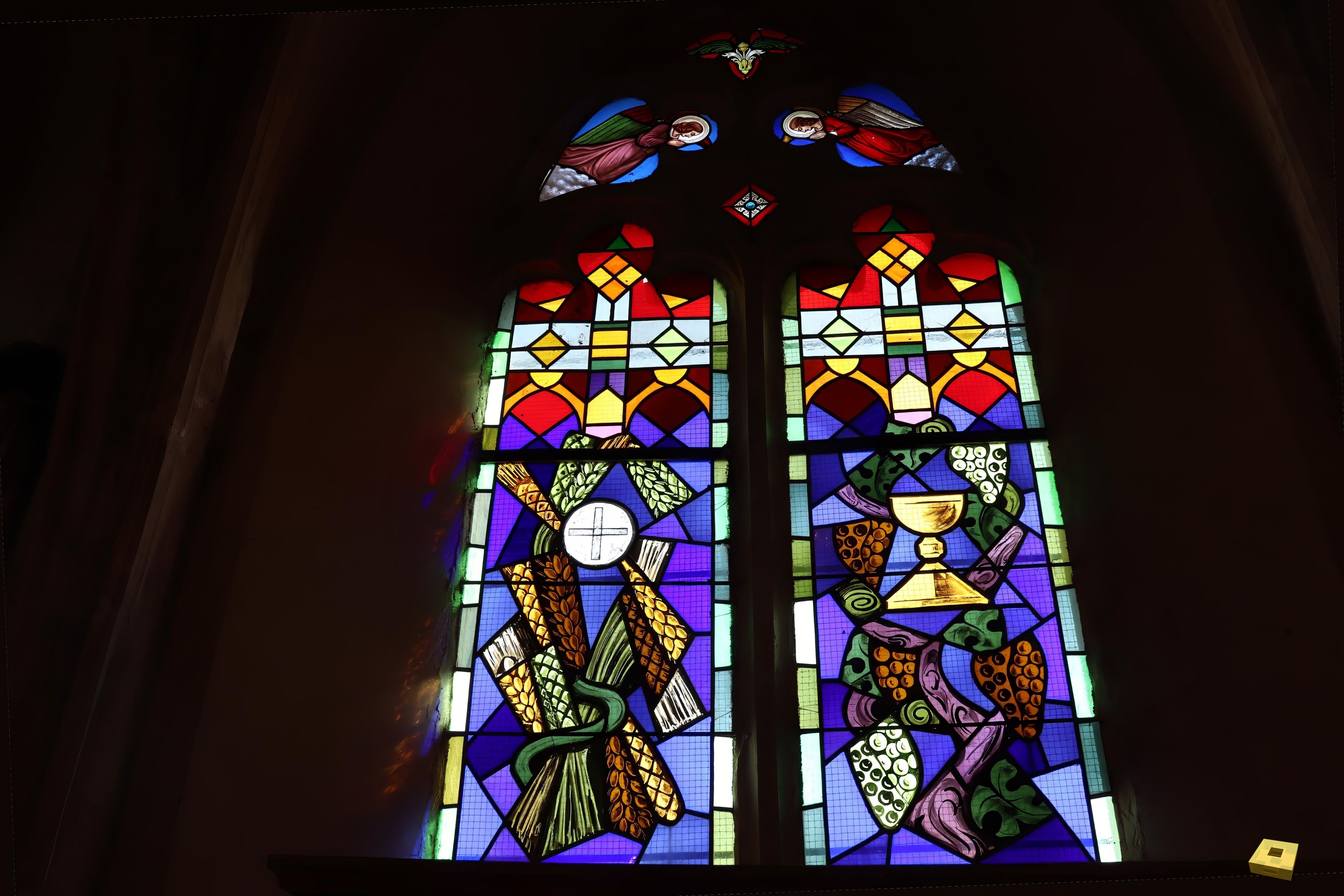
Dieses moderne Buntglasfenster besteht aus zwei vertikalen Lanzetten mit geometrischen Linien und hellen Farben, gekrönt von einem dreilappigen Tympanon. Zwei betende Engel nehmen den oberen Teil der Lanzetten ein, eine klassische Darstellung, um den himmlischen und heiligen Charakter der Komposition zu betonen. Der geometrische und moderne Stil dieses Buntglasfensters unterscheidet sich von traditionellen figürlichen Darstellungen. Es nutzt jedoch die Prinzipien der christlichen Symbolik, um eine spirituelle Botschaft zu vermitteln. Links sind die Ähren und die Hostie wesentliche Symbole des eucharistischen Opfers. Die Hostie, auf der ein griechisches Kreuz abgebildet ist, erinnert an den während der Messe dargebotenen Leib Christi. Die Weizenähren stehen in Verbindung mit der Feldarbeit und der Ernte und symbolisieren die menschliche Anstrengung, die notwendig ist, um das Material des Sakraments zu bringen: Brot. Auf der rechten Seite ist der goldene Kelch ein direktes Symbol für das Blut Christi, das während der Eucharistie mit den Gläubigen geteilt wird. In den Weintrauben und im Weinstock spiegeln sich die Worte Christi wider: „Ich bin der Weinstock, ihr seid die Reben“ (Johannes 15:5). Der Wein wird so zum Blut des Neuen Bundes, zum Zeichen des Heils und der Erlösung. Die betenden Engel auf den Lanzetten erinnern an die Gegenwart Gottes und an die himmlische Vermittlung. Sie stellen diese Szene in einen liturgischen und heiligen Kontext und erinnern an die Einheit zwischen Himmel und Erde in der Eucharistie.Dieses moderne Buntglasfenster besteht aus zwei vertikalen Lanzetten mit geometrischen Linien und hellen Farben, gekrönt von einem dreilappigen Tympanon. Zwei betende Engel nehmen den oberen Teil der Lanzetten ein, eine klassische Darstellung, um den himmlischen und heiligen Charakter der Komposition zu betonen. Der geometrische und moderne Stil dieses Buntglasfensters unterscheidet sich von traditionellen figürlichen Darstellungen. Es nutzt jedoch die Prinzipien der christlichen Symbolik, um eine spirituelle Botschaft zu vermitteln. Links sind die Ähren und die Hostie wesentliche Symbole des eucharistischen Opfers. Die Hostie, auf der ein griechisches Kreuz abgebildet ist, erinnert an den während der Messe dargebotenen Leib Christi. Die Weizenähren stehen in Verbindung mit der Feldarbeit und der Ernte und symbolisieren die menschliche Anstrengung, die notwendig ist, um das Material des Sakraments zu bringen: Brot. Auf der rechten Seite ist der goldene Kelch ein direktes Symbol für das Blut Christi, das während der Eucharistie mit den Gläubigen geteilt wird. In den Weintrauben und im Weinstock spiegeln sich die Worte Christi wider: „Ich bin der Weinstock, ihr seid die Reben“ (Johannes 15:5). Der Wein wird so zum Blut des Neuen Bundes, zum Zeichen des Heils und der Erlösung. Die betenden Engel auf den Lanzetten erinnern an die Gegenwart Gottes und an die himmlische Vermittlung. Sie stellen diese Szene in einen liturgischen und heiligen Kontext und erinnern an die Einheit zwischen Himmel und Erde in der Eucharistie.
Dieses moderne Buntglasfenster besteht aus zwei vertikalen Lanzetten mit geometrischen Linien und hellen Farben, gekrönt von einem dreilappigen Tympanon. Zwei betende Engel nehmen den oberen Teil der Lanzetten ein, eine klassische Darstellung, um den himmlischen und heiligen Charakter der Komposition zu betonen. Der geometrische und moderne Stil dieses Buntglasfensters unterscheidet sich von traditionellen figürlichen Darstellungen. Es nutzt jedoch die Prinzipien der christlichen Symbolik, um eine spirituelle Botschaft zu vermitteln. Links sind die Ähren und die Hostie wesentliche Symbole des eucharistischen Opfers. Die Hostie, auf der ein griechisches Kreuz abgebildet ist, erinnert an den während der Messe dargebotenen Leib Christi. Die Weizenähren stehen in Verbindung mit der Feldarbeit und der Ernte und symbolisieren die menschliche Anstrengung, die notwendig ist, um das Material des Sakraments zu bringen: Brot. Auf der rechten Seite ist der goldene Kelch ein direktes Symbol für das Blut Christi, das während der Eucharistie mit den Gläubigen geteilt wird. In den Weintrauben und im Weinstock spiegeln sich die Worte Christi wider: „Ich bin der Weinstock, ihr seid die Reben“ (Johannes 15:5). Der Wein wird so zum Blut des Neuen Bundes, zum Zeichen des Heils und der Erlösung. Die betenden Engel auf den Lanzetten erinnern an die Gegenwart Gottes und an die himmlische Vermittlung. Sie stellen diese Szene in einen liturgischen und heiligen Kontext und erinnern an die Einheit zwischen Himmel und Erde in der Eucharistie.


