


 Relanges, church - stained glass window
Click on the image to go full screen.
The stained glass window of the Notre-Dame church in Relanges is a decorative piece in the neo-Gothic style characteristic of the 19th century.
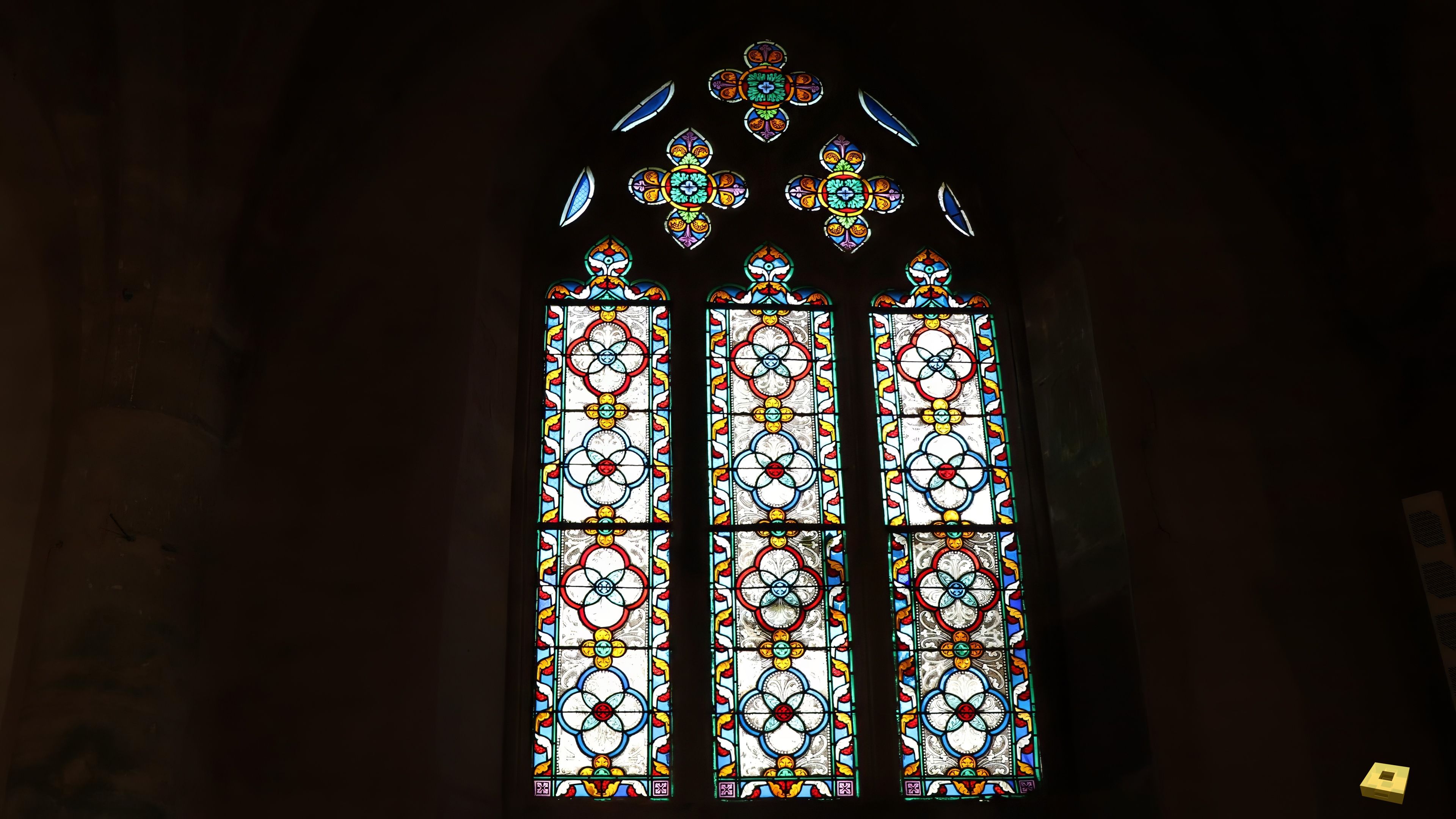
This stained glass window is distinguished by a tripartite structure, composed of three vertical lancets topped with quatrefoils and trefoils in the tympanum. Each lancet is decorated with repetitive geometric motifs organized in central rosettes inscribed in circles. These circles are surrounded by stylized plant motifs. The whole is enriched with multi-colored borders alternating between shades of red, blue, yellow and green, which give vitality to the whole. The upper panels are particularly decorative: quatrefoils display floral motifs and varied color schemes. Unlike other figurative stained glass windows present in churches in the region, this one does not seem to contain any explicit characters or narrative scenes. The stained glass window of Notre-Dame in Relanges is a typical 19th-century work, influenced by the neo-Gothic revival. The geometric and plant elements reflect a search for balance and harmony, characteristic of the decorative style of this period. The vibrant colours, especially red and blue, are designed to interact with natural light, creating a luminous and sacred atmosphere within the building. This type of stained glass serves primarily an ornamental function. In the absence of biblical figures or scenes, it can be interpreted as an exaltation of divine creation through the beauty of forms and colours. The use of rosettes and quatrefoils in the tympanum recalls the original Gothic architecture, reinterpreted here for rural churches.This stained glass window is distinguished by a tripartite structure, composed of three vertical lancets topped with quatrefoils and trefoils in the tympanum. Each lancet is decorated with repetitive geometric motifs organized in central rosettes inscribed in circles. These circles are surrounded by stylized plant motifs. The whole is enriched with multi-colored borders alternating between shades of red, blue, yellow and green, which give vitality to the whole. The upper panels are particularly decorative: quatrefoils display floral motifs and varied color schemes. Unlike other figurative stained glass windows present in churches in the region, this one does not seem to contain any explicit characters or narrative scenes. The stained glass window of Notre-Dame in Relanges is a typical 19th-century work, influenced by the neo-Gothic revival. The geometric and plant elements reflect a search for balance and harmony, characteristic of the decorative style of this period. The vibrant colours, especially red and blue, are designed to interact with natural light, creating a luminous and sacred atmosphere within the building. This type of stained glass serves primarily an ornamental function. In the absence of biblical figures or scenes, it can be interpreted as an exaltation of divine creation through the beauty of forms and colours. The use of rosettes and quatrefoils in the tympanum recalls the original Gothic architecture, reinterpreted here for rural churches.
This stained glass window is distinguished by a tripartite structure, composed of three vertical lancets topped with quatrefoils and trefoils in the tympanum. Each lancet is decorated with repetitive geometric motifs organized in central rosettes inscribed in circles. These circles are surrounded by stylized plant motifs. The whole is enriched with multi-colored borders alternating between shades of red, blue, yellow and green, which give vitality to the whole. The upper panels are particularly decorative: quatrefoils display floral motifs and varied color schemes. Unlike other figurative stained glass windows present in churches in the region, this one does not seem to contain any explicit characters or narrative scenes. The stained glass window of Notre-Dame in Relanges is a typical 19th-century work, influenced by the neo-Gothic revival. The geometric and plant elements reflect a search for balance and harmony, characteristic of the decorative style of this period. The vibrant colours, especially red and blue, are designed to interact with natural light, creating a luminous and sacred atmosphere within the building. This type of stained glass serves primarily an ornamental function. In the absence of biblical figures or scenes, it can be interpreted as an exaltation of divine creation through the beauty of forms and colours. The use of rosettes and quatrefoils in the tympanum recalls the original Gothic architecture, reinterpreted here for rural churches.


