


 Circourt, église - vitrail
Cliquez dans l'image pour passer en plein écran.
Ce vitrail vertical en plein cintre représente Saint-Pierre-Fourier.
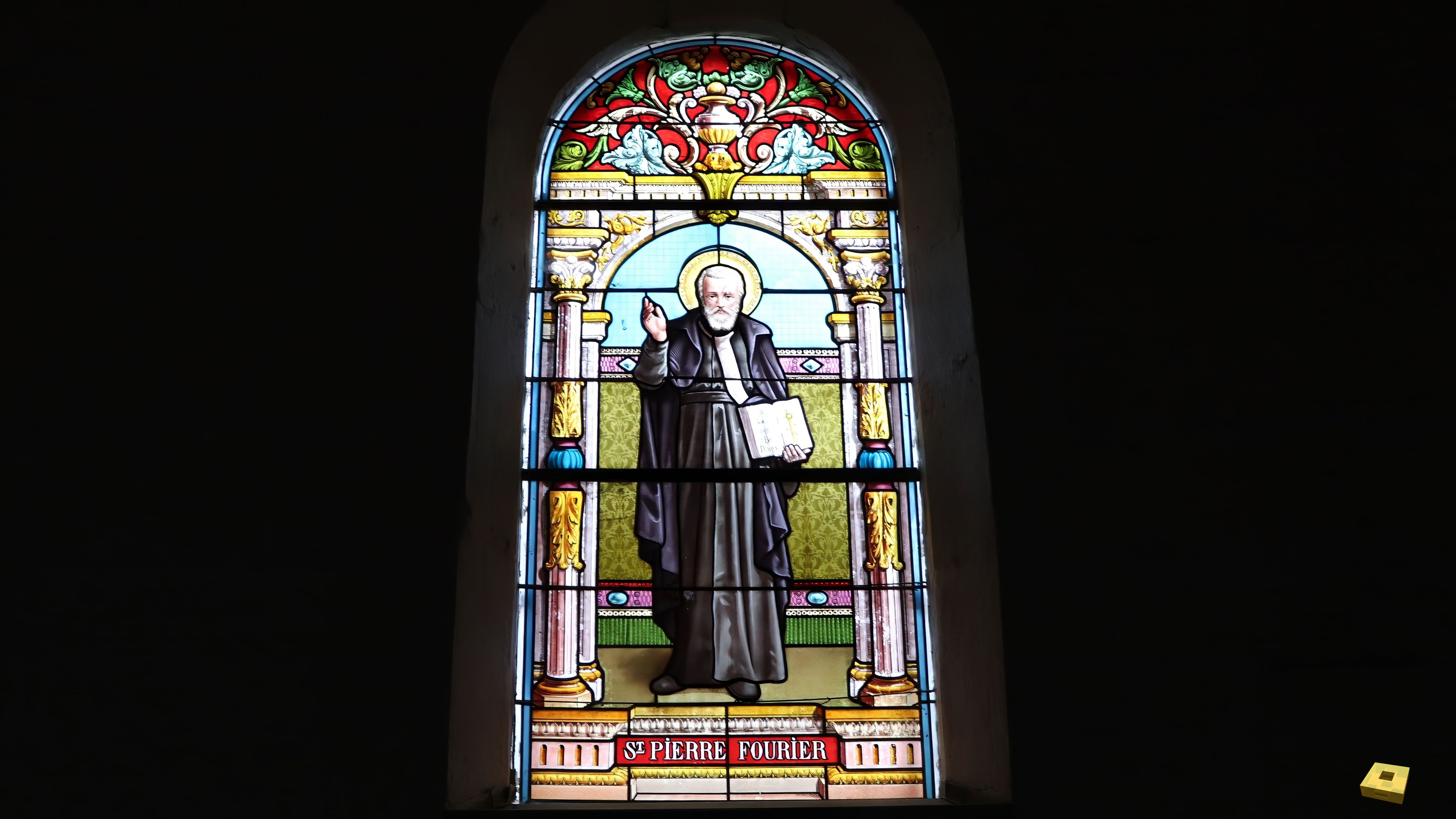
Ce vitrail vertical en plein cintre représente Saint-Pierre-Fourier, figure majeure du renouveau spirituel et éducatif de la Lorraine au tournant des XVIe et XVIIe siècles. Le saint est représenté debout, de face, vêtu de l’habit noir des chanoines réguliers de Saint-Augustin, dont il fut un réformateur. Il lève la main droite dans un geste d’enseignement, tandis que sa main gauche tient un livre ouvert. Une auréole dorée ceint sa tête. ST PIERRE FOURIER est inscrit clairement dans un cartouche en bas du vitrail, lettres blanches sur fond rouge. Le décor architectural est richement orné avec colonnes cannelées, chapiteaux corinthiens, entablement classique, et un motif de fond de tenture. Tout autour, on retrouve les rinceaux, volutes végétales typiques de l’esthétique du XIXe siècle, dans un style néo-Renaissance très répandu dans les églises françaises à cette époque.Ce vitrail vertical en plein cintre représente Saint-Pierre-Fourier, figure majeure du renouveau spirituel et éducatif de la Lorraine au tournant des XVIe et XVIIe siècles. Le saint est représenté debout, de face, vêtu de l’habit noir des chanoines réguliers de Saint-Augustin, dont il fut un réformateur. Il lève la main droite dans un geste d’enseignement, tandis que sa main gauche tient un livre ouvert. Une auréole dorée ceint sa tête. ST PIERRE FOURIER est inscrit clairement dans un cartouche en bas du vitrail, lettres blanches sur fond rouge. Le décor architectural est richement orné avec colonnes cannelées, chapiteaux corinthiens, entablement classique, et un motif de fond de tenture. Tout autour, on retrouve les rinceaux, volutes végétales typiques de l’esthétique du XIXe siècle, dans un style néo-Renaissance très répandu dans les églises françaises à cette époque.
Ce vitrail vertical en plein cintre représente Saint-Pierre-Fourier, figure majeure du renouveau spirituel et éducatif de la Lorraine au tournant des XVIe et XVIIe siècles. Le saint est représenté debout, de face, vêtu de l’habit noir des chanoines réguliers de Saint-Augustin, dont il fut un réformateur. Il lève la main droite dans un geste d’enseignement, tandis que sa main gauche tient un livre ouvert. Une auréole dorée ceint sa tête. ST PIERRE FOURIER est inscrit clairement dans un cartouche en bas du vitrail, lettres blanches sur fond rouge. Le décor architectural est richement orné avec colonnes cannelées, chapiteaux corinthiens, entablement classique, et un motif de fond de tenture. Tout autour, on retrouve les rinceaux, volutes végétales typiques de l’esthétique du XIXe siècle, dans un style néo-Renaissance très répandu dans les églises françaises à cette époque.


