


 Sion, N.D. vitrail
Cliquez dans l'image pour passer en plein écran.
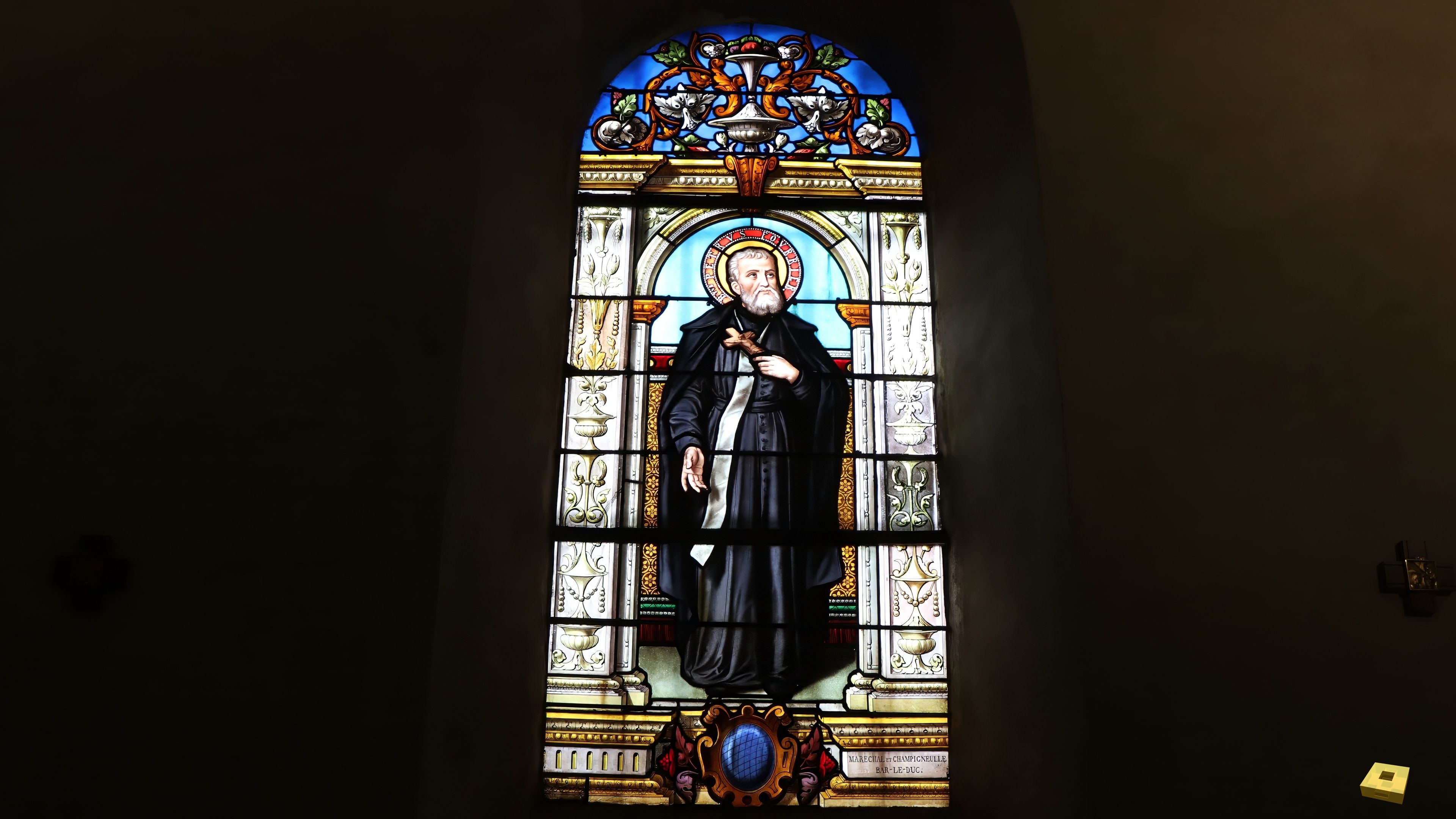
Le vitrail représente Saint-Pierre Fourier (1565-1640).
Verriers : Maréchal et Champigneulle Bar-le-Duc.
Le vitrail représente Saint Pierre Fourier (1565-1640), un prêtre canonisé pour son engagement pastoral et éducatif. Dans l'auréole entourant sa tête, l'inscription en latin "Beatus Petrus Fourier" (Bienheureux Pierre Fourier) atteste de son statut de saint reconnu. Il est souvent surnommé "le bon père de Mattaincourt" en raison de son rôle dans la communauté lorraine. Pierre Fourier est représenté en pied, vêtu de la soutane noire des prêtres et d'un manteau noir. Il tient une croix en bois contre sa poitrine, symbole de sa dévotion et de son attachement au Christ. Cet objet renvoie aussi à son rôle d'évangélisateur. Sa main droite est ouverte, dans un geste d’accueil ou de bénédiction, reflétant sa bienveillance. L’Auréole : L’auréole dorée derrière sa tête signale sa sainteté. L'inscription ajoute une dimension narrative, confirmant son identité. Le saint est placé dans une niche architecturée, ornée de colonnes et de motifs floraux, qui rappelle l’architecture gothique. Ces éléments renforcent le caractère sacré de la scène. Au bas du vitrail, on voit un blason bleu. En bas à droite, il est écrit : « Maréchal et Champigneulles, Bar-le-Duc », indiquant probablement le fabricant.
Le vitrail représente Saint Pierre Fourier (1565-1640), un prêtre canonisé pour son engagement pastoral et éducatif. Dans l'auréole entourant sa tête, l'inscription en latin "Beatus Petrus Fourier" (Bienheureux Pierre Fourier) atteste de son statut de saint reconnu. Il est souvent surnommé "le bon père de Mattaincourt" en raison de son rôle dans la communauté lorraine. Pierre Fourier est représenté en pied, vêtu de la soutane noire des prêtres et d'un manteau noir. Il tient une croix en bois contre sa poitrine, symbole de sa dévotion et de son attachement au Christ. Cet objet renvoie aussi à son rôle d'évangélisateur. Sa main droite est ouverte, dans un geste d’accueil ou de bénédiction, reflétant sa bienveillance. L’Auréole : L’auréole dorée derrière sa tête signale sa sainteté. L'inscription ajoute une dimension narrative, confirmant son identité. Le saint est placé dans une niche architecturée, ornée de colonnes et de motifs floraux, qui rappelle l’architecture gothique. Ces éléments renforcent le caractère sacré de la scène. Au bas du vitrail, on voit un blason bleu. En bas à droite, il est écrit : « Maréchal et Champigneulles, Bar-le-Duc », indiquant probablement le fabricant.

