


 Relanges, oppidum
Cliquez dans l'image pour passer en plein écran.
Plan du site.
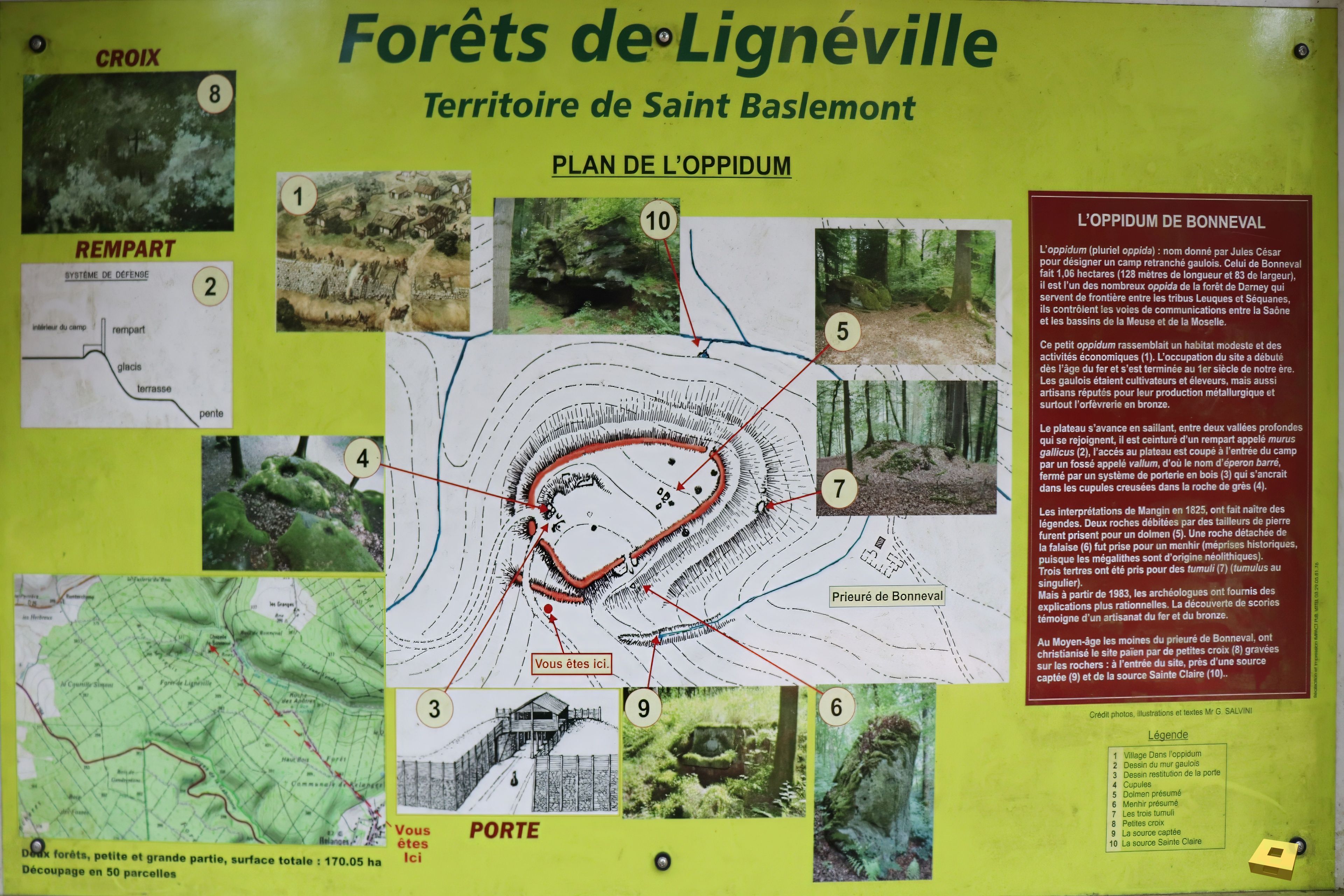
L’oppidum (pluriel oppida) : nom donné par Jules César pour désigner un camp retranché gaulois. Celui de Bonneval fait 1,06 hectares (128 mètres de longueur et 83 de largeur), il est l’un des nombreux oppida de la forêt de Darney qui servent de frontière entre les tribus Leuques et Séquanes, ils contrôlent les voies de communications entre la Saône et les bassins de la Meuse et de la Moselle. Ce petit oppidum rassemblait un habitat modeste et des activités économiques (1). L’occupation du site a débuté dès l’âge du fer et s’est terminée au 1er siècle de notre ère. Les Gaulois étaient cultivateurs et éleveurs, mais aussi artisans réputés pour leur production métallurgique et surtout l’orfèvrerie en bronze. Le plateau s’avance en saillant, entre deux vallées profondes qui se rejoignent, il est ceinturé d’un rempart appelé murus gallicus (2), l’accès au plateau est coupé à l’entrée du camp par un fossé appelé vallum, d’où le nom d’éperon barré, fermé par un système de porterie en bois (3) qui s’ancrait dans les cupules creusées dans la roche de grès (4). Les interprétations de Mangin en 1825 ont fait naître des légendes. Deux roches débitées par des tailleurs de pierre furent prises pour un dolmen (5). Une roche détachée de la falaise (6) fut prise pour un menhir (méprises historiques, puisque les mégalithes sont d’origine néolithique). Trois tertres ont été pris pour des tumuli (7) (tumulus au singulier). Mais à partir de 1983, les archéologues ont fourni des explications plus rationnelles. La découverte de scories témoigne d’un artisanat du fer et du bronze. Au Moyen Âge, les moines du prieuré de Bonneval ont christianisé le site païen par de petites croix (8) gravées sur les rochers : à l’entrée du site, près d’une source captée (9) et de la source Sainte Claire (10).L’oppidum (pluriel oppida) : nom donné par Jules César pour désigner un camp retranché gaulois. Celui de Bonneval fait 1,06 hectares (128 mètres de longueur et 83 de largeur), il est l’un des nombreux oppida de la forêt de Darney qui servent de frontière entre les tribus Leuques et Séquanes, ils contrôlent les voies de communications entre la Saône et les bassins de la Meuse et de la Moselle. Ce petit oppidum rassemblait un habitat modeste et des activités économiques (1). L’occupation du site a débuté dès l’âge du fer et s’est terminée au 1er siècle de notre ère. Les Gaulois étaient cultivateurs et éleveurs, mais aussi artisans réputés pour leur production métallurgique et surtout l’orfèvrerie en bronze. Le plateau s’avance en saillant, entre deux vallées profondes qui se rejoignent, il est ceinturé d’un rempart appelé murus gallicus (2), l’accès au plateau est coupé à l’entrée du camp par un fossé appelé vallum, d’où le nom d’éperon barré, fermé par un système de porterie en bois (3) qui s’ancrait dans les cupules creusées dans la roche de grès (4). Les interprétations de Mangin en 1825 ont fait naître des légendes. Deux roches débitées par des tailleurs de pierre furent prises pour un dolmen (5). Une roche détachée de la falaise (6) fut prise pour un menhir (méprises historiques, puisque les mégalithes sont d’origine néolithique). Trois tertres ont été pris pour des tumuli (7) (tumulus au singulier). Mais à partir de 1983, les archéologues ont fourni des explications plus rationnelles. La découverte de scories témoigne d’un artisanat du fer et du bronze. Au Moyen Âge, les moines du prieuré de Bonneval ont christianisé le site païen par de petites croix (8) gravées sur les rochers : à l’entrée du site, près d’une source captée (9) et de la source Sainte Claire (10).
L’oppidum (pluriel oppida) : nom donné par Jules César pour désigner un camp retranché gaulois. Celui de Bonneval fait 1,06 hectares (128 mètres de longueur et 83 de largeur), il est l’un des nombreux oppida de la forêt de Darney qui servent de frontière entre les tribus Leuques et Séquanes, ils contrôlent les voies de communications entre la Saône et les bassins de la Meuse et de la Moselle. Ce petit oppidum rassemblait un habitat modeste et des activités économiques (1). L’occupation du site a débuté dès l’âge du fer et s’est terminée au 1er siècle de notre ère. Les Gaulois étaient cultivateurs et éleveurs, mais aussi artisans réputés pour leur production métallurgique et surtout l’orfèvrerie en bronze. Le plateau s’avance en saillant, entre deux vallées profondes qui se rejoignent, il est ceinturé d’un rempart appelé murus gallicus (2), l’accès au plateau est coupé à l’entrée du camp par un fossé appelé vallum, d’où le nom d’éperon barré, fermé par un système de porterie en bois (3) qui s’ancrait dans les cupules creusées dans la roche de grès (4). Les interprétations de Mangin en 1825 ont fait naître des légendes. Deux roches débitées par des tailleurs de pierre furent prises pour un dolmen (5). Une roche détachée de la falaise (6) fut prise pour un menhir (méprises historiques, puisque les mégalithes sont d’origine néolithique). Trois tertres ont été pris pour des tumuli (7) (tumulus au singulier). Mais à partir de 1983, les archéologues ont fourni des explications plus rationnelles. La découverte de scories témoigne d’un artisanat du fer et du bronze. Au Moyen Âge, les moines du prieuré de Bonneval ont christianisé le site païen par de petites croix (8) gravées sur les rochers : à l’entrée du site, près d’une source captée (9) et de la source Sainte Claire (10).

