


 Nijon, St Remy - stained glass
Click on the image to go full screen.
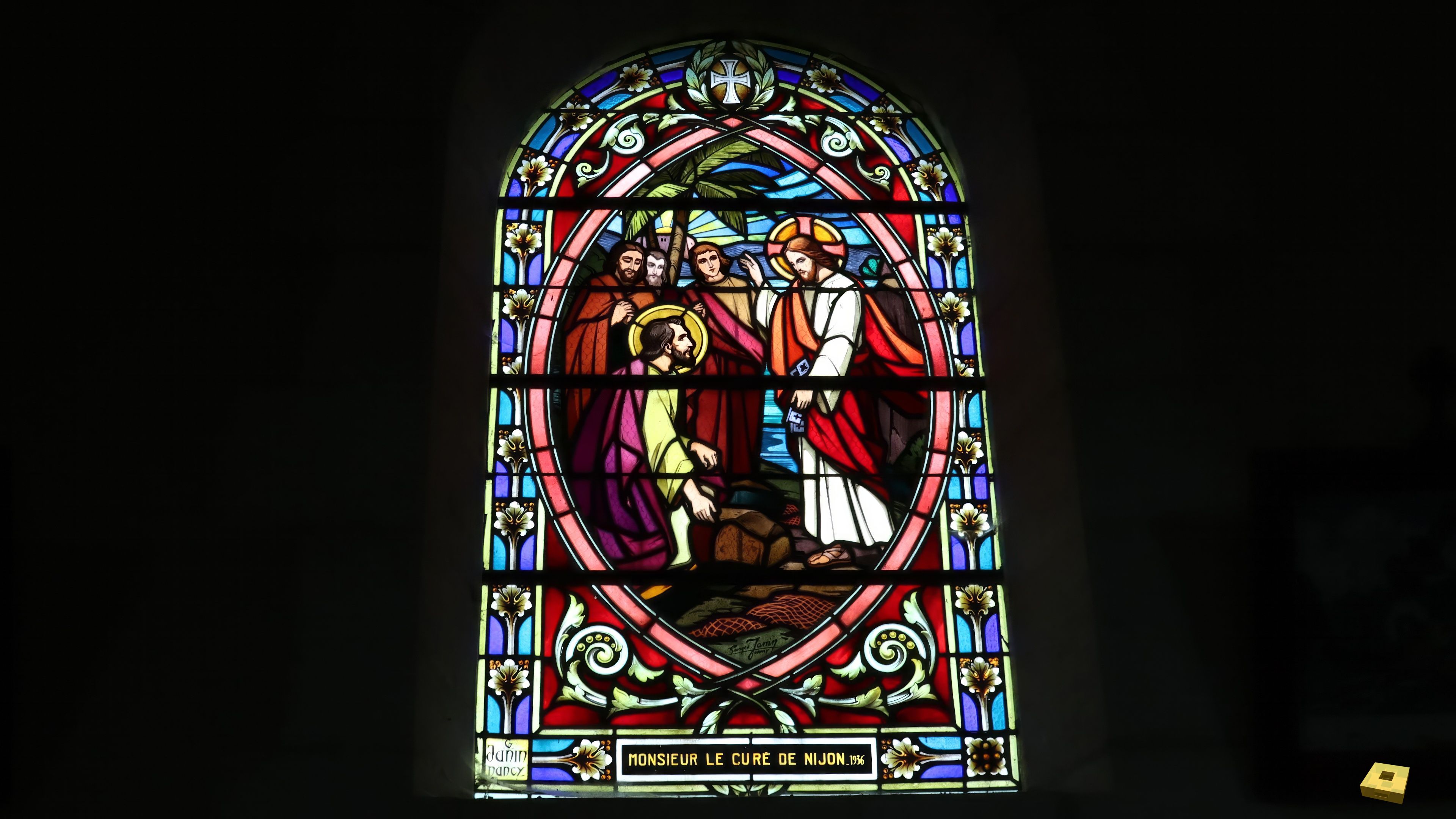
The stained glass window represents Jesus Christ handing over the keys of the Kingdom of Heaven to the apostle Peter. The priest of Nijon in 1936 is the sponsor.
The stained glass window depicts a biblical scene in which Jesus Christ hands over the keys to the Kingdom of Heaven to the apostle Peter. This episode is recounted in the Gospel according to Matthew Chapter 16, verses 18 and 19. The composition is organized around Jesus and Peter, placed in the center of the scene. Jesus, standing, is dressed in a white tunic and a red cloak. He hands the keys to Peter, kneeling before him, a symbol of the transmission of spiritual authority. The cruciform halo around Jesus' head indicates his divine nature. Peter, kneeling, is dressed in a yellow tunic, a color associated with faith and eternity, and wears a halo, testifying to his status as a saint. The expression on his face betrays a mixture of humility and devotion. In the background, we can see other apostles, witnesses to this event, with varied expressions, ranging from attention to reflection. A palm tree and a blue sky indicate a Mediterranean setting, probably Caesarea Philippi where this scene would have taken place according to tradition. The stained glass window is signed at the bottom by the workshop "Janin, Nancy" and the sponsor is the priest of Nijon in 1936.The stained glass window depicts a biblical scene in which Jesus Christ hands over the keys to the Kingdom of Heaven to the apostle Peter. This episode is recounted in the Gospel according to Matthew Chapter 16, verses 18 and 19. The composition is organized around Jesus and Peter, placed in the center of the scene. Jesus, standing, is dressed in a white tunic and a red cloak. He hands the keys to Peter, kneeling before him, a symbol of the transmission of spiritual authority. The cruciform halo around Jesus' head indicates his divine nature. Peter, kneeling, is dressed in a yellow tunic, a color associated with faith and eternity, and wears a halo, testifying to his status as a saint. The expression on his face betrays a mixture of humility and devotion. In the background, we can see other apostles, witnesses to this event, with varied expressions, ranging from attention to reflection. A palm tree and a blue sky indicate a Mediterranean setting, probably Caesarea Philippi where this scene would have taken place according to tradition. The stained glass window is signed at the bottom by the workshop "Janin, Nancy" and the sponsor is the priest of Nijon in 1936.
The stained glass window depicts a biblical scene in which Jesus Christ hands over the keys to the Kingdom of Heaven to the apostle Peter. This episode is recounted in the Gospel according to Matthew Chapter 16, verses 18 and 19. The composition is organized around Jesus and Peter, placed in the center of the scene. Jesus, standing, is dressed in a white tunic and a red cloak. He hands the keys to Peter, kneeling before him, a symbol of the transmission of spiritual authority. The cruciform halo around Jesus' head indicates his divine nature. Peter, kneeling, is dressed in a yellow tunic, a color associated with faith and eternity, and wears a halo, testifying to his status as a saint. The expression on his face betrays a mixture of humility and devotion. In the background, we can see other apostles, witnesses to this event, with varied expressions, ranging from attention to reflection. A palm tree and a blue sky indicate a Mediterranean setting, probably Caesarea Philippi where this scene would have taken place according to tradition. The stained glass window is signed at the bottom by the workshop "Janin, Nancy" and the sponsor is the priest of Nijon in 1936.


