


 Circourt, church - stained glass window
Click on the image to go full screen.
This stained glass window depicts Saint Joseph with the Infant Jesus.
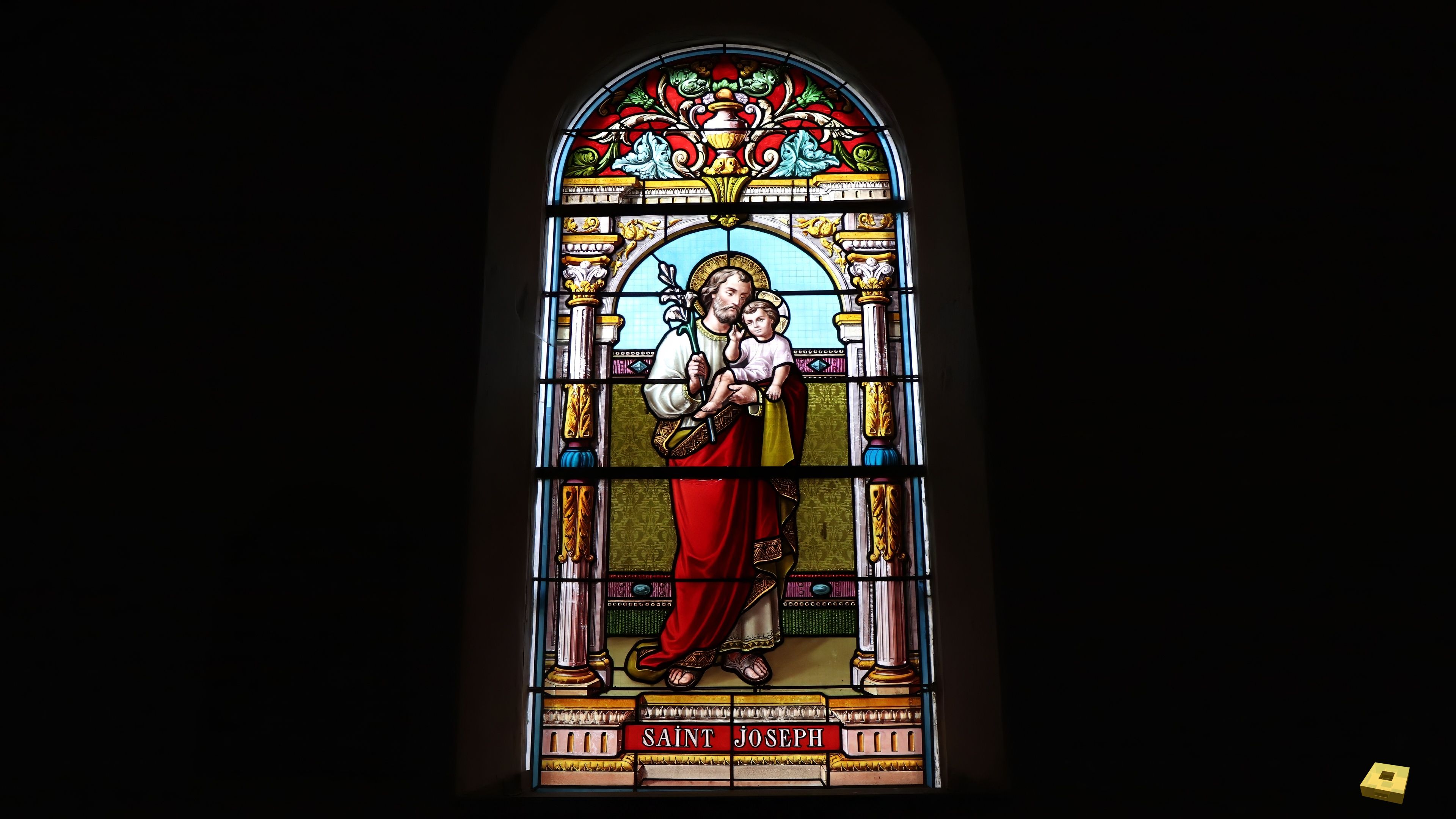
This stained-glass window depicts Saint Joseph holding the Infant Jesus in his arms. Both are haloed. Joseph is dressed in a white tunic and a red cloak edged with gold. In his left hand, he holds a staff adorned with lilies, a symbol of his purity and justice. The Infant Jesus, dressed in white, blesses with his right hand. The scene is framed by trompe-l'oeil Neoclassical-style architecture with Corinthian columns, gilded capitals, and a pediment decorated with scrolls and plant motifs. The background, behind the figures, is covered with a green damask curtain or hanging, which creates a sense of depth while also setting the main scene apart. At the bottom of the window, on a red cartouche, the inscription SAINT JOSEPH clearly appears, unequivocally confirming the identity of the main character.This stained-glass window depicts Saint Joseph holding the Infant Jesus in his arms. Both are haloed. Joseph is dressed in a white tunic and a red cloak edged with gold. In his left hand, he holds a staff adorned with lilies, a symbol of his purity and justice. The Infant Jesus, dressed in white, blesses with his right hand. The scene is framed by trompe-l'oeil Neoclassical-style architecture with Corinthian columns, gilded capitals, and a pediment decorated with scrolls and plant motifs. The background, behind the figures, is covered with a green damask curtain or hanging, which creates a sense of depth while also setting the main scene apart. At the bottom of the window, on a red cartouche, the inscription SAINT JOSEPH clearly appears, unequivocally confirming the identity of the main character.
This stained-glass window depicts Saint Joseph holding the Infant Jesus in his arms. Both are haloed. Joseph is dressed in a white tunic and a red cloak edged with gold. In his left hand, he holds a staff adorned with lilies, a symbol of his purity and justice. The Infant Jesus, dressed in white, blesses with his right hand. The scene is framed by trompe-l'oeil Neoclassical-style architecture with Corinthian columns, gilded capitals, and a pediment decorated with scrolls and plant motifs. The background, behind the figures, is covered with a green damask curtain or hanging, which creates a sense of depth while also setting the main scene apart. At the bottom of the window, on a red cartouche, the inscription SAINT JOSEPH clearly appears, unequivocally confirming the identity of the main character.


