


 Viocourt, église - vitrail
Cliquez dans l'image pour passer en plein écran.
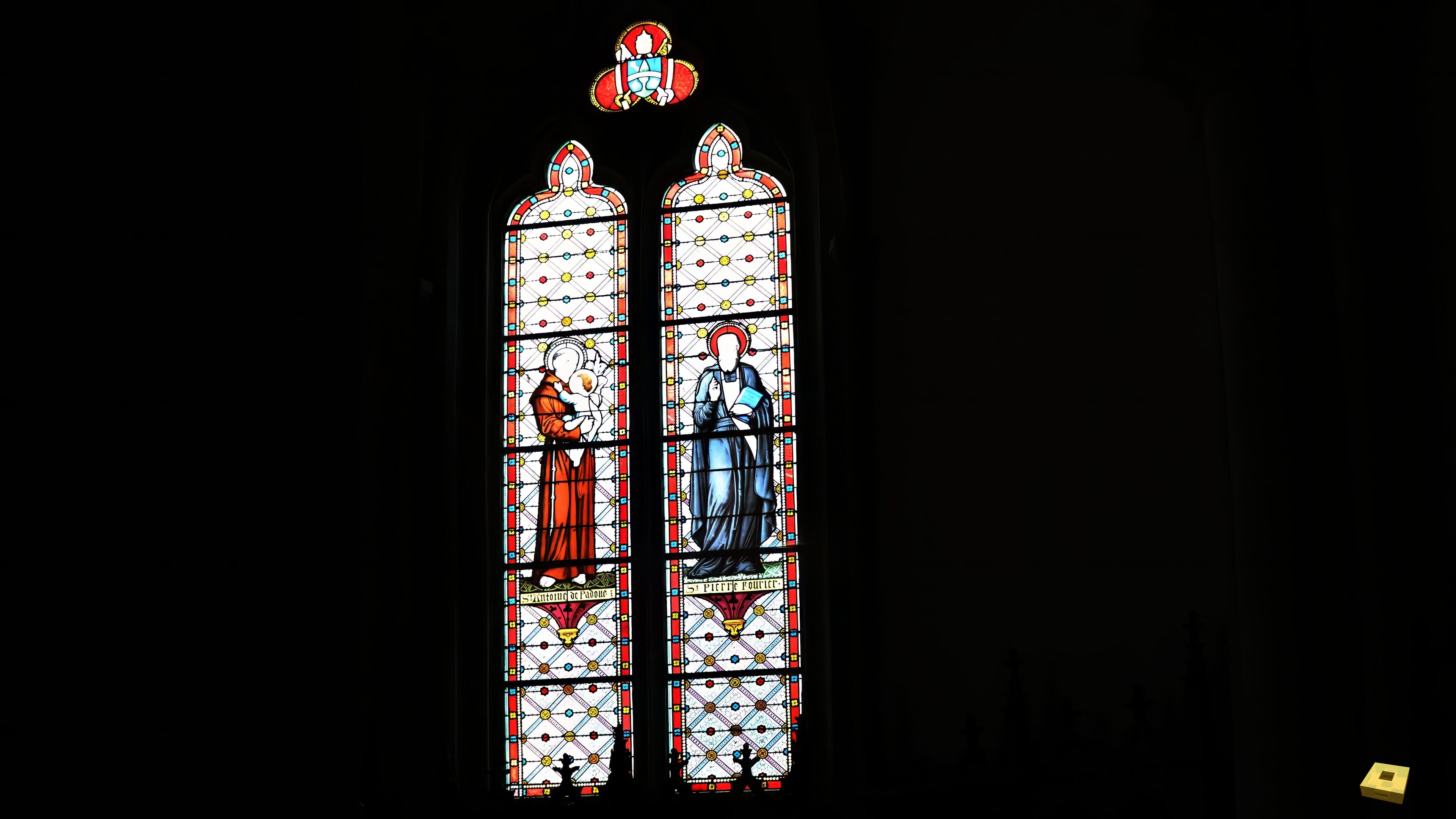
Ce vitrail représente à gauche, Saint-Antoine-de- Padoue et à droite, Saint-Pierre-Fourier.
Sur ce vitrail, les deux personnages représentés sont clairement identifiés par les inscriptions en bas de chaque panneau. Sur le panneau de gauche, C'est Saint Antoine de Padoue. Il est représenté en habit franciscain, reconnaissable à la robe marron avec une ceinture de corde, typique de l’ordre des Franciscains. Il tient l'Enfant Jésus dans ses bras, ce qui est l'un des attributs les plus courants de Saint Antoine de Padoue. Selon la légende, Saint Antoine a eu une vision de l'Enfant Jésus, et il est souvent représenté ainsi dans l’art religieux pour symboliser sa pureté et sa dévotion. L’auréole autour de sa tête confirme son statut de saint. Sur le panneau de droite, nous voyons Saint Pierre Fourier. Saint Pierre Fourier est représenté en habit de prêtre, avec une auréole autour de la tête. Il tient un livre, symbole de son érudition et de son rôle en tant que réformateur de l’Église. Pierre Fourier est connu pour son rôle de réformateur et de fondateur de la Congrégation de Notre-Dame, une communauté religieuse dédiée à l’éducation des jeunes filles. Il est très vénéré en Lorraine, d'où il est originaire. Le geste de la main indique souvent un enseignement ou une bénédiction, symbolisant son dévouement envers les fidèles et son rôle spirituel dans la région. Ces deux saints, bien que différents dans leurs missions, sont tous deux reconnus pour leur dévotion et leur impact spirituel.Sur ce vitrail, les deux personnages représentés sont clairement identifiés par les inscriptions en bas de chaque panneau. Sur le panneau de gauche, C'est Saint Antoine de Padoue. Il est représenté en habit franciscain, reconnaissable à la robe marron avec une ceinture de corde, typique de l’ordre des Franciscains. Il tient l'Enfant Jésus dans ses bras, ce qui est l'un des attributs les plus courants de Saint Antoine de Padoue. Selon la légende, Saint Antoine a eu une vision de l'Enfant Jésus, et il est souvent représenté ainsi dans l’art religieux pour symboliser sa pureté et sa dévotion. L’auréole autour de sa tête confirme son statut de saint. Sur le panneau de droite, nous voyons Saint Pierre Fourier. Saint Pierre Fourier est représenté en habit de prêtre, avec une auréole autour de la tête. Il tient un livre, symbole de son érudition et de son rôle en tant que réformateur de l’Église. Pierre Fourier est connu pour son rôle de réformateur et de fondateur de la Congrégation de Notre-Dame, une communauté religieuse dédiée à l’éducation des jeunes filles. Il est très vénéré en Lorraine, d'où il est originaire. Le geste de la main indique souvent un enseignement ou une bénédiction, symbolisant son dévouement envers les fidèles et son rôle spirituel dans la région. Ces deux saints, bien que différents dans leurs missions, sont tous deux reconnus pour leur dévotion et leur impact spirituel.
Sur ce vitrail, les deux personnages représentés sont clairement identifiés par les inscriptions en bas de chaque panneau. Sur le panneau de gauche, C'est Saint Antoine de Padoue. Il est représenté en habit franciscain, reconnaissable à la robe marron avec une ceinture de corde, typique de l’ordre des Franciscains. Il tient l'Enfant Jésus dans ses bras, ce qui est l'un des attributs les plus courants de Saint Antoine de Padoue. Selon la légende, Saint Antoine a eu une vision de l'Enfant Jésus, et il est souvent représenté ainsi dans l’art religieux pour symboliser sa pureté et sa dévotion. L’auréole autour de sa tête confirme son statut de saint. Sur le panneau de droite, nous voyons Saint Pierre Fourier. Saint Pierre Fourier est représenté en habit de prêtre, avec une auréole autour de la tête. Il tient un livre, symbole de son érudition et de son rôle en tant que réformateur de l’Église. Pierre Fourier est connu pour son rôle de réformateur et de fondateur de la Congrégation de Notre-Dame, une communauté religieuse dédiée à l’éducation des jeunes filles. Il est très vénéré en Lorraine, d'où il est originaire. Le geste de la main indique souvent un enseignement ou une bénédiction, symbolisant son dévouement envers les fidèles et son rôle spirituel dans la région. Ces deux saints, bien que différents dans leurs missions, sont tous deux reconnus pour leur dévotion et leur impact spirituel.

