The organs
Electronic or pipe organs.
The electronic organs presented here are by Johannus, Visount, Monarke, and Allen.
Album documents " The organs " :
Neufchâteau, St Nicolas - organ (small)

Nijon, St Remy - organ
Noncourt, Ste Ursule - organ
Norroy, church - organ
Rebeuville, church - organ

Rebeuville, church - organ
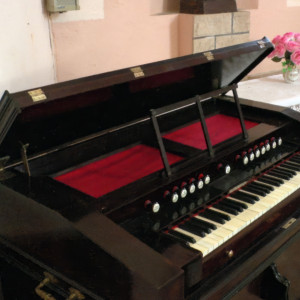
Rouceux, chapel - harmonium
Rouceux, chapel - harmonium
Rouceux, church - organ
Rouceux, church - organ
Semilly, church - organ
Seraumont, church - organ
St Blin, church - organ
St Élophe, church - organ
St Élophe, church - organ
St Ouen, church - organ
In France, churches primarily house pipe organs, traditional and monumental instruments associated with sacred music. Their powerful and majestic sound is produced by wooden or metal pipes, operated by a bellows. Since the 19th century, mechanical, pneumatic, and then electrical systems have facilitated their playing. Electronic organs, which appeared in the 20th century, reproduce the sounds of pipe organs using electronic generators. More compact and portable, they are sometimes used as a complement, particularly for practical or budgetary reasons.
Approximately 10,000 organs are listed in France, 1,500 of which are classified as historical monuments.