


 Sion, N.D. vitrail
Cliquez dans l'image pour passer en plein écran.
Ce vitrail représente une figure féminine couronnée, identifiée par son auréole comme étant Sainte Bertha.
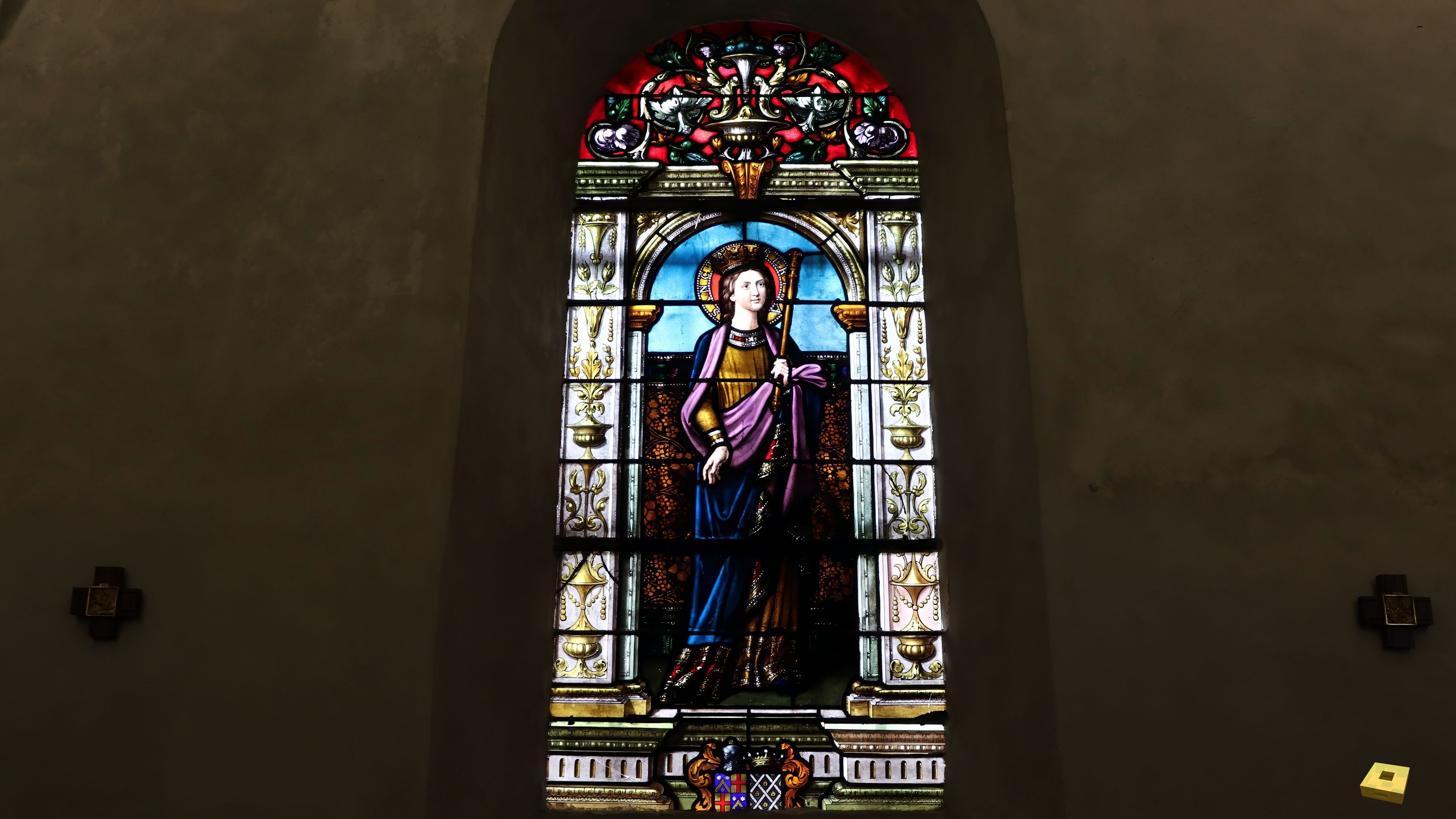
Ce vitrail représente une figure féminine couronnée, identifiée par son auréole comme étant Sainte Bertha. Sainte Bertha est couronnée, soulignant son statut noble. Elle tient un bâton ou une crosse, symbole souvent associé à une figure d'autorité religieuse. Son auréole inscrit son nom, confirmant son identification. Elle est vêtue d’une robe longue dorée, surmontée d’un manteau pourpre, symbole de dignité et de piété. Ces couleurs sont significatives de sa sainteté et de son rang. Les colonnes ornées de motifs végétaux et les volutes au sommet ajoutent un caractère solennel et sacré. Ces éléments évoquent la richesse artistique et religieuse de l’époque de création du vitrail. Le décor floral et les détails dorés confèrent une impression de splendeur céleste. En bas du vitrail se trouve un blason armorié, composé de deux écus. L’un porte des motifs croisés et des bandes verticales, tandis que l’autre semble inclure des fleurs de lys et d'autres symboles héraldiques. Ce blason peut représenter une famille noble ou un mécène ayant financé la réalisation du vitrail. Il est couronné, ce qui peut indiquer une famille d’importance royale ou une abbaye sous protection royale.Ce vitrail représente une figure féminine couronnée, identifiée par son auréole comme étant Sainte Bertha. Sainte Bertha est couronnée, soulignant son statut noble. Elle tient un bâton ou une crosse, symbole souvent associé à une figure d'autorité religieuse. Son auréole inscrit son nom, confirmant son identification. Elle est vêtue d’une robe longue dorée, surmontée d’un manteau pourpre, symbole de dignité et de piété. Ces couleurs sont significatives de sa sainteté et de son rang. Les colonnes ornées de motifs végétaux et les volutes au sommet ajoutent un caractère solennel et sacré. Ces éléments évoquent la richesse artistique et religieuse de l’époque de création du vitrail. Le décor floral et les détails dorés confèrent une impression de splendeur céleste. En bas du vitrail se trouve un blason armorié, composé de deux écus. L’un porte des motifs croisés et des bandes verticales, tandis que l’autre semble inclure des fleurs de lys et d'autres symboles héraldiques. Ce blason peut représenter une famille noble ou un mécène ayant financé la réalisation du vitrail. Il est couronné, ce qui peut indiquer une famille d’importance royale ou une abbaye sous protection royale.
Ce vitrail représente une figure féminine couronnée, identifiée par son auréole comme étant Sainte Bertha. Sainte Bertha est couronnée, soulignant son statut noble. Elle tient un bâton ou une crosse, symbole souvent associé à une figure d'autorité religieuse. Son auréole inscrit son nom, confirmant son identification. Elle est vêtue d’une robe longue dorée, surmontée d’un manteau pourpre, symbole de dignité et de piété. Ces couleurs sont significatives de sa sainteté et de son rang. Les colonnes ornées de motifs végétaux et les volutes au sommet ajoutent un caractère solennel et sacré. Ces éléments évoquent la richesse artistique et religieuse de l’époque de création du vitrail. Le décor floral et les détails dorés confèrent une impression de splendeur céleste. En bas du vitrail se trouve un blason armorié, composé de deux écus. L’un porte des motifs croisés et des bandes verticales, tandis que l’autre semble inclure des fleurs de lys et d'autres symboles héraldiques. Ce blason peut représenter une famille noble ou un mécène ayant financé la réalisation du vitrail. Il est couronné, ce qui peut indiquer une famille d’importance royale ou une abbaye sous protection royale.

