


 Liffol, église - vitrail
Cliquez dans l'image pour passer en plein écran.
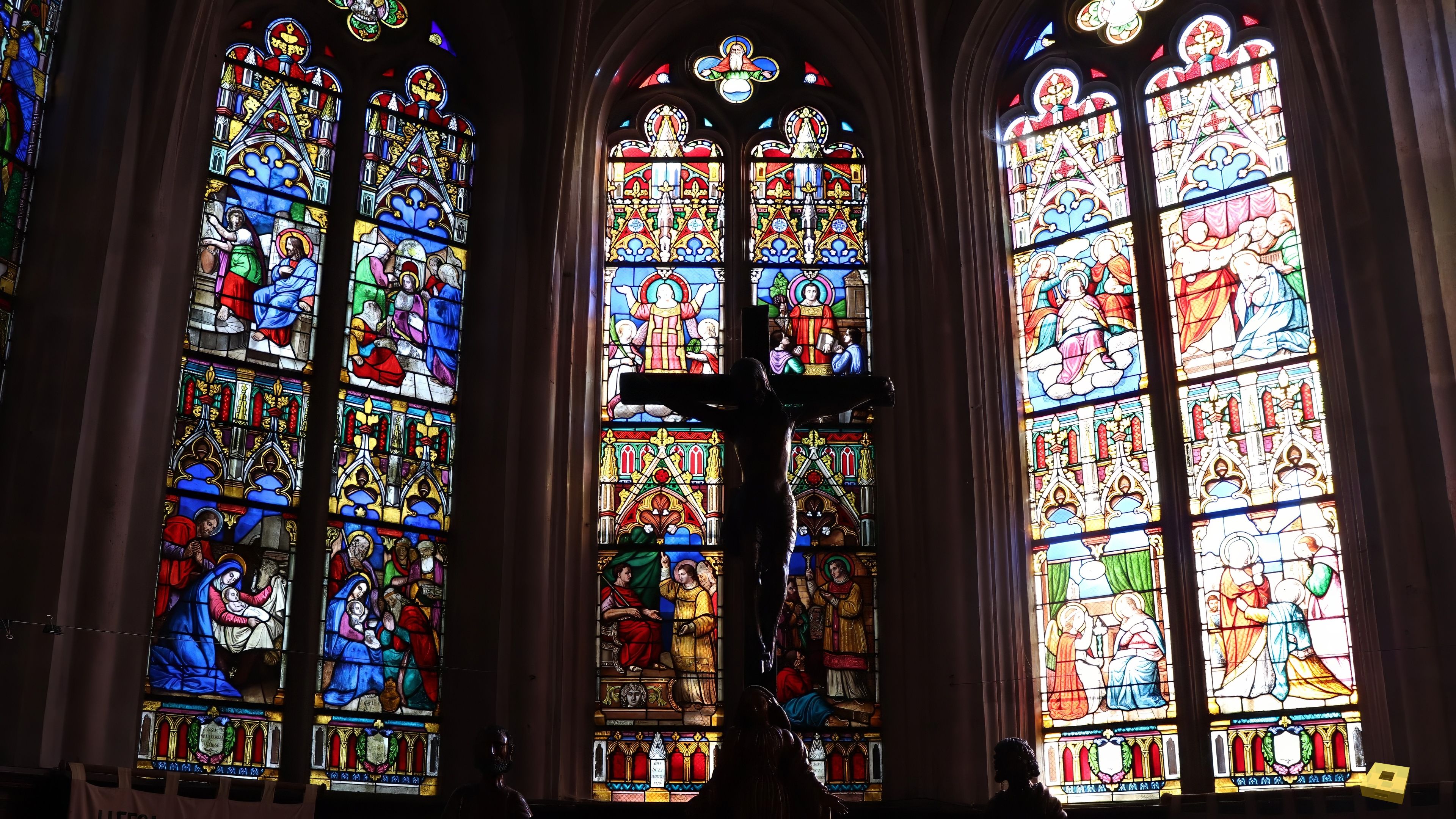
Observons le panneau à gauche. on y voit, en haut à gauche, Jésus et la samaritaine au puits, en bas, la nativité, en haut à droite, et en bas à droite, l'adoration des mages.
Le panneau le plus à gauche est composé de deux grandes lancettes verticales divisées en quatre scènes majeures : deux registres supérieurs et deux registres inférieurs. Chaque scène est un tableau narratif, encadré par des motifs floraux et des éléments gothiques, caractéristiques du XIXe siècle. Les thèmes principaux abordés sont la Nativité, l’adoration des Mages, l’enseignement de Jésus et l’accomplissement des prophéties à travers des événements comme la rencontre avec la Samaritaine. Ces vitraux sont destinés à enseigner, inspirer et élever les fidèles par la beauté de l’art sacré.Le panneau le plus à gauche est composé de deux grandes lancettes verticales divisées en quatre scènes majeures : deux registres supérieurs et deux registres inférieurs. Chaque scène est un tableau narratif, encadré par des motifs floraux et des éléments gothiques, caractéristiques du XIXe siècle. Les thèmes principaux abordés sont la Nativité, l’adoration des Mages, l’enseignement de Jésus et l’accomplissement des prophéties à travers des événements comme la rencontre avec la Samaritaine. Ces vitraux sont destinés à enseigner, inspirer et élever les fidèles par la beauté de l’art sacré.
Le panneau le plus à gauche est composé de deux grandes lancettes verticales divisées en quatre scènes majeures : deux registres supérieurs et deux registres inférieurs. Chaque scène est un tableau narratif, encadré par des motifs floraux et des éléments gothiques, caractéristiques du XIXe siècle. Les thèmes principaux abordés sont la Nativité, l’adoration des Mages, l’enseignement de Jésus et l’accomplissement des prophéties à travers des événements comme la rencontre avec la Samaritaine. Ces vitraux sont destinés à enseigner, inspirer et élever les fidèles par la beauté de l’art sacré.

