


 Pargny, Kirche - Buntglasfenster
Klicken Sie auf das Bild, um es im Vollbildmodus anzuzeigen.
Dieses Buntglasfenster stellt die Heilige Katharina dar.
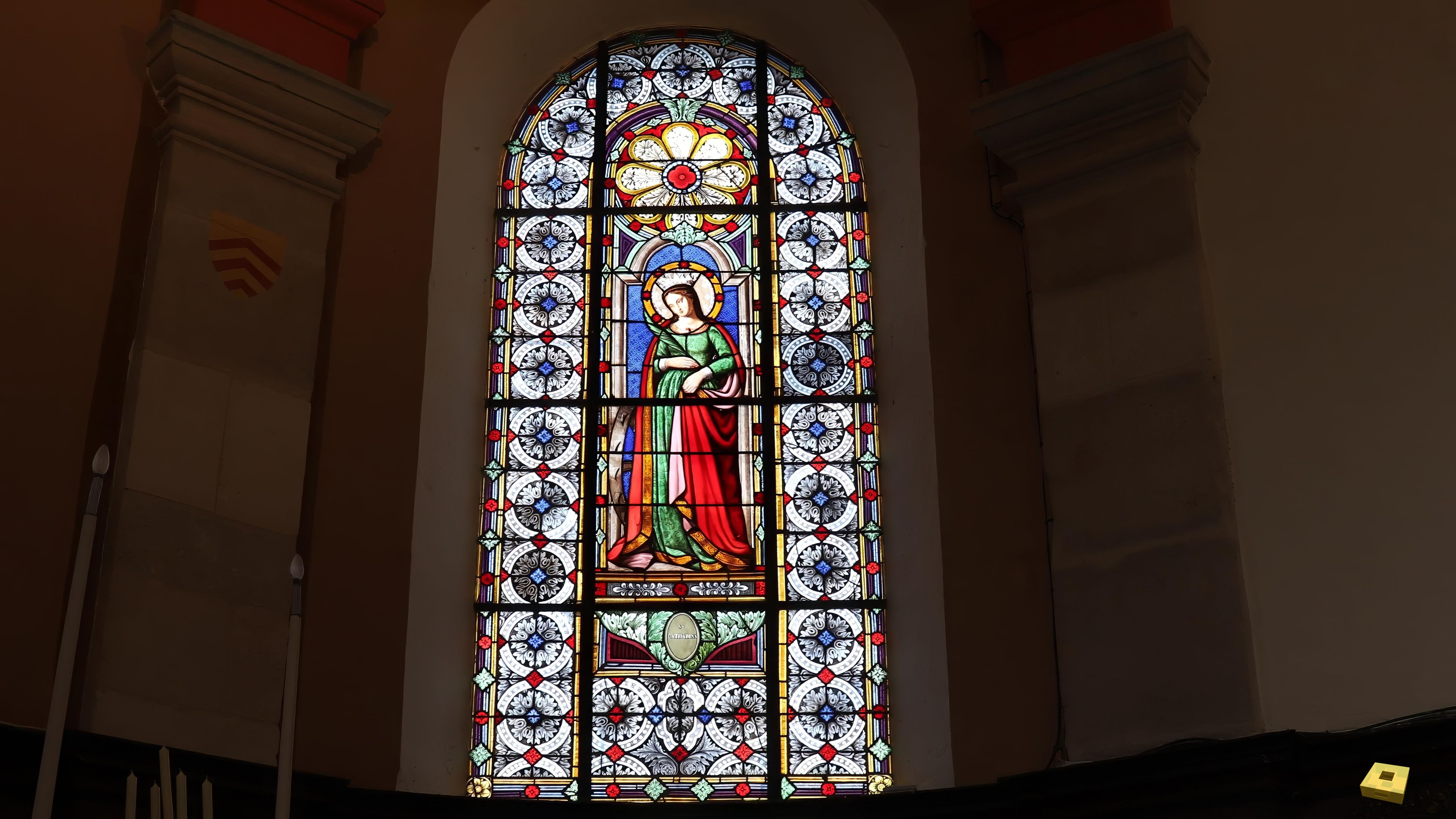
Das Buntglasfenster zeigt eine gekrönte und mit einem Heiligenschein versehene weibliche Figur, die ein mit Goldmotiven verziertes grünes Kleid trägt und in einen roten Umhang gehüllt ist. Sie steht neben dem Rad ihrer Folter in einer stilisierten architektonischen Nische, gekrönt von einem blauen ornamentalen Hintergrund. Der untere Teil des Buntglasfensters trägt eine ovale Inschrift mit dem Namen „Heilige Katharina“. Der Umfang des Buntglasfensters besteht aus geometrischen und floralen Motiven in Medaillons, reich an Farben und dekorativen Details, typisch für die religiöse Kunst des 19. Jahrhunderts. Der Stil dieses Buntglasfensters ist Teil der neugotischen Bewegung, die mittelalterliche Motive in einer dekorativen und liturgischen Perspektive neu interpretiert. Die simulierten architektonischen Elemente wie die Nische und die Ornamente im Hintergrund heben die Hauptfigur hervor und verstärken gleichzeitig ihren heiligen Charakter. Die floralen und geometrischen Motive am Rand sind präzise ausgeführt und fügen eine symbolische Dimension hinzu: Die Blumen können Reinheit oder Martyrium hervorrufen, während die kreisförmigen Formen göttliche Ewigkeit ausdrücken. Die Farbpalette ist hell und wird von Primärtönen (Rot, Blau, Grün) dominiert, aufgewertet durch goldene Details, die dem Ganzen einen feierlichen Charakter und optimale Sichtbarkeit in einem liturgischen Raum verleihen.Das Buntglasfenster zeigt eine gekrönte und mit einem Heiligenschein versehene weibliche Figur, die ein mit Goldmotiven verziertes grünes Kleid trägt und in einen roten Umhang gehüllt ist. Sie steht neben dem Rad ihrer Folter in einer stilisierten architektonischen Nische, gekrönt von einem blauen ornamentalen Hintergrund. Der untere Teil des Buntglasfensters trägt eine ovale Inschrift mit dem Namen „Heilige Katharina“. Der Umfang des Buntglasfensters besteht aus geometrischen und floralen Motiven in Medaillons, reich an Farben und dekorativen Details, typisch für die religiöse Kunst des 19. Jahrhunderts. Der Stil dieses Buntglasfensters ist Teil der neugotischen Bewegung, die mittelalterliche Motive in einer dekorativen und liturgischen Perspektive neu interpretiert. Die simulierten architektonischen Elemente wie die Nische und die Ornamente im Hintergrund heben die Hauptfigur hervor und verstärken gleichzeitig ihren heiligen Charakter. Die floralen und geometrischen Motive am Rand sind präzise ausgeführt und fügen eine symbolische Dimension hinzu: Die Blumen können Reinheit oder Martyrium hervorrufen, während die kreisförmigen Formen göttliche Ewigkeit ausdrücken. Die Farbpalette ist hell und wird von Primärtönen (Rot, Blau, Grün) dominiert, aufgewertet durch goldene Details, die dem Ganzen einen feierlichen Charakter und optimale Sichtbarkeit in einem liturgischen Raum verleihen.
Das Buntglasfenster zeigt eine gekrönte und mit einem Heiligenschein versehene weibliche Figur, die ein mit Goldmotiven verziertes grünes Kleid trägt und in einen roten Umhang gehüllt ist. Sie steht neben dem Rad ihrer Folter in einer stilisierten architektonischen Nische, gekrönt von einem blauen ornamentalen Hintergrund. Der untere Teil des Buntglasfensters trägt eine ovale Inschrift mit dem Namen „Heilige Katharina“. Der Umfang des Buntglasfensters besteht aus geometrischen und floralen Motiven in Medaillons, reich an Farben und dekorativen Details, typisch für die religiöse Kunst des 19. Jahrhunderts. Der Stil dieses Buntglasfensters ist Teil der neugotischen Bewegung, die mittelalterliche Motive in einer dekorativen und liturgischen Perspektive neu interpretiert. Die simulierten architektonischen Elemente wie die Nische und die Ornamente im Hintergrund heben die Hauptfigur hervor und verstärken gleichzeitig ihren heiligen Charakter. Die floralen und geometrischen Motive am Rand sind präzise ausgeführt und fügen eine symbolische Dimension hinzu: Die Blumen können Reinheit oder Martyrium hervorrufen, während die kreisförmigen Formen göttliche Ewigkeit ausdrücken. Die Farbpalette ist hell und wird von Primärtönen (Rot, Blau, Grün) dominiert, aufgewertet durch goldene Details, die dem Ganzen einen feierlichen Charakter und optimale Sichtbarkeit in einem liturgischen Raum verleihen.


