


 Viocourt, church - stained glass
Click on the image to go full screen.
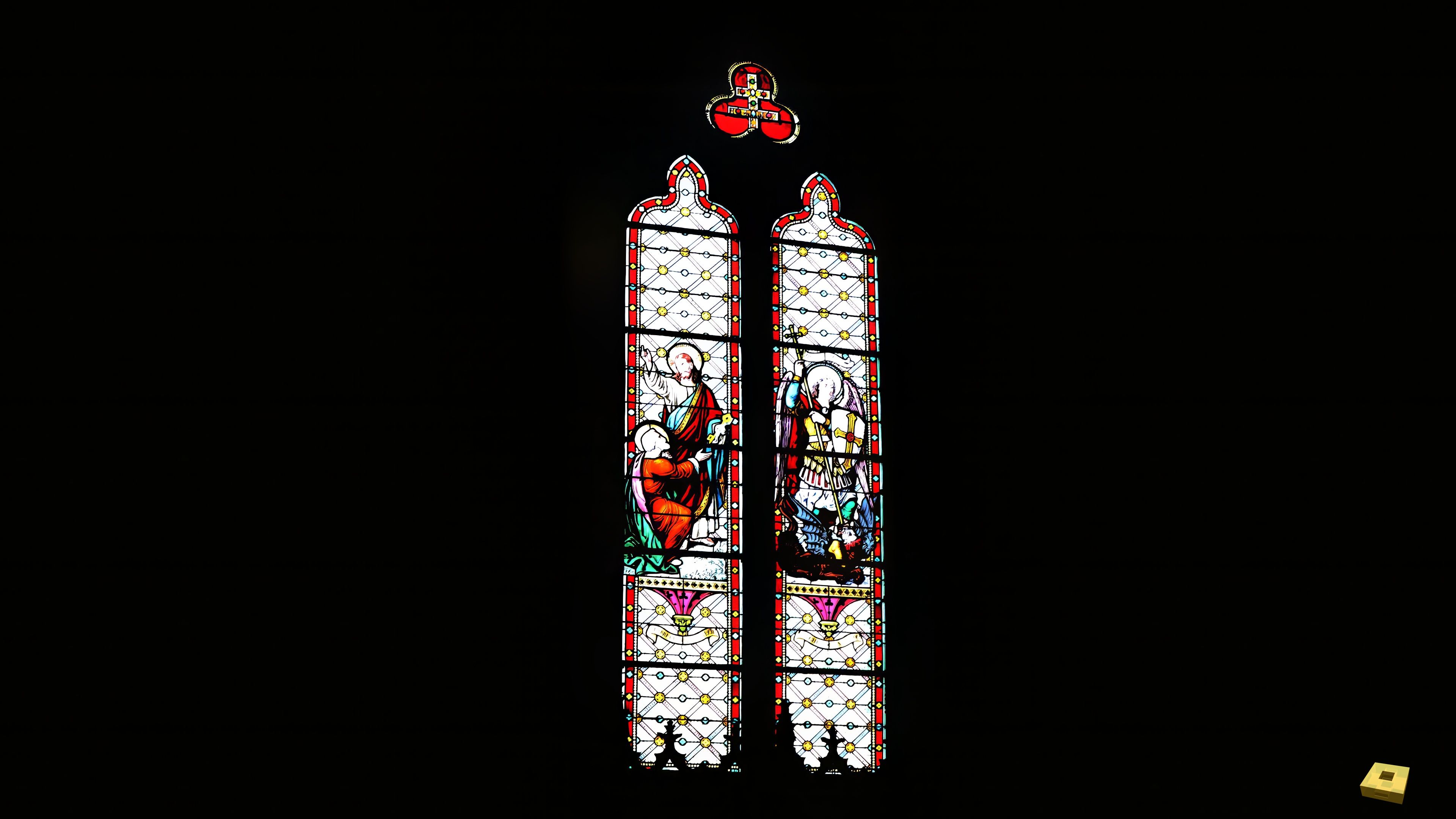
This stained glass window depicts two distinct scenes. On the left, we can see the Handing over of the keys to Saint Peter by Jesus Christ. On the right, it is Saint Michael defeating the demon.
This stained glass window depicts two distinct scenes. On the left panel, the figure at the top, with a halo and raising his hand, is Jesus Christ. He is depicted handing over the keys to another figure, a gesture that symbolizes spiritual authority and the passing of power. The figure kneeling at the bottom, receiving the keys, is Saint Peter, recognizable by the keys that are his main attribute. According to Christian tradition, Jesus entrusted Peter with the "keys to the Kingdom of Heaven", symbolizing his role as leader of the apostles and first pope. This scene is known as the Handing Over of the Keys to Saint Peter and illustrates the transmission of authority from Jesus to Peter, marking the foundation of the Church. On the right panel, the winged figure in armor is the Archangel Michael. He is depicted defeating a demon or Satan, a scene emblematic of Saint Michael's victory over the forces of evil. He holds a spear or sword to defeat the demon, a typical attribute of Saint Michael in Christian iconography. Under Saint Michael, the demon is depicted in a defeated position, crushed under the archangel. This symbolizes divine protection against the forces of evil and God's justice. These two scenes are commonly depicted in Christian art to emphasize the themes of spiritual authority (with Saint Peter) and divine protection (with Saint Michael).This stained glass window depicts two distinct scenes. On the left panel, the figure at the top, with a halo and raising his hand, is Jesus Christ. He is depicted handing over the keys to another figure, a gesture that symbolizes spiritual authority and the passing of power. The figure kneeling at the bottom, receiving the keys, is Saint Peter, recognizable by the keys that are his main attribute. According to Christian tradition, Jesus entrusted Peter with the "keys to the Kingdom of Heaven", symbolizing his role as leader of the apostles and first pope. This scene is known as the Handing Over of the Keys to Saint Peter and illustrates the transmission of authority from Jesus to Peter, marking the foundation of the Church. On the right panel, the winged figure in armor is the Archangel Michael. He is depicted defeating a demon or Satan, a scene emblematic of Saint Michael's victory over the forces of evil. He holds a spear or sword to defeat the demon, a typical attribute of Saint Michael in Christian iconography. Under Saint Michael, the demon is depicted in a defeated position, crushed under the archangel. This symbolizes divine protection against the forces of evil and God's justice. These two scenes are commonly depicted in Christian art to emphasize the themes of spiritual authority (with Saint Peter) and divine protection (with Saint Michael).
This stained glass window depicts two distinct scenes. On the left panel, the figure at the top, with a halo and raising his hand, is Jesus Christ. He is depicted handing over the keys to another figure, a gesture that symbolizes spiritual authority and the passing of power. The figure kneeling at the bottom, receiving the keys, is Saint Peter, recognizable by the keys that are his main attribute. According to Christian tradition, Jesus entrusted Peter with the "keys to the Kingdom of Heaven", symbolizing his role as leader of the apostles and first pope. This scene is known as the Handing Over of the Keys to Saint Peter and illustrates the transmission of authority from Jesus to Peter, marking the foundation of the Church. On the right panel, the winged figure in armor is the Archangel Michael. He is depicted defeating a demon or Satan, a scene emblematic of Saint Michael's victory over the forces of evil. He holds a spear or sword to defeat the demon, a typical attribute of Saint Michael in Christian iconography. Under Saint Michael, the demon is depicted in a defeated position, crushed under the archangel. This symbolizes divine protection against the forces of evil and God's justice. These two scenes are commonly depicted in Christian art to emphasize the themes of spiritual authority (with Saint Peter) and divine protection (with Saint Michael).


