


 Sion, N.D. stained glass window
Click on the image to go full screen.
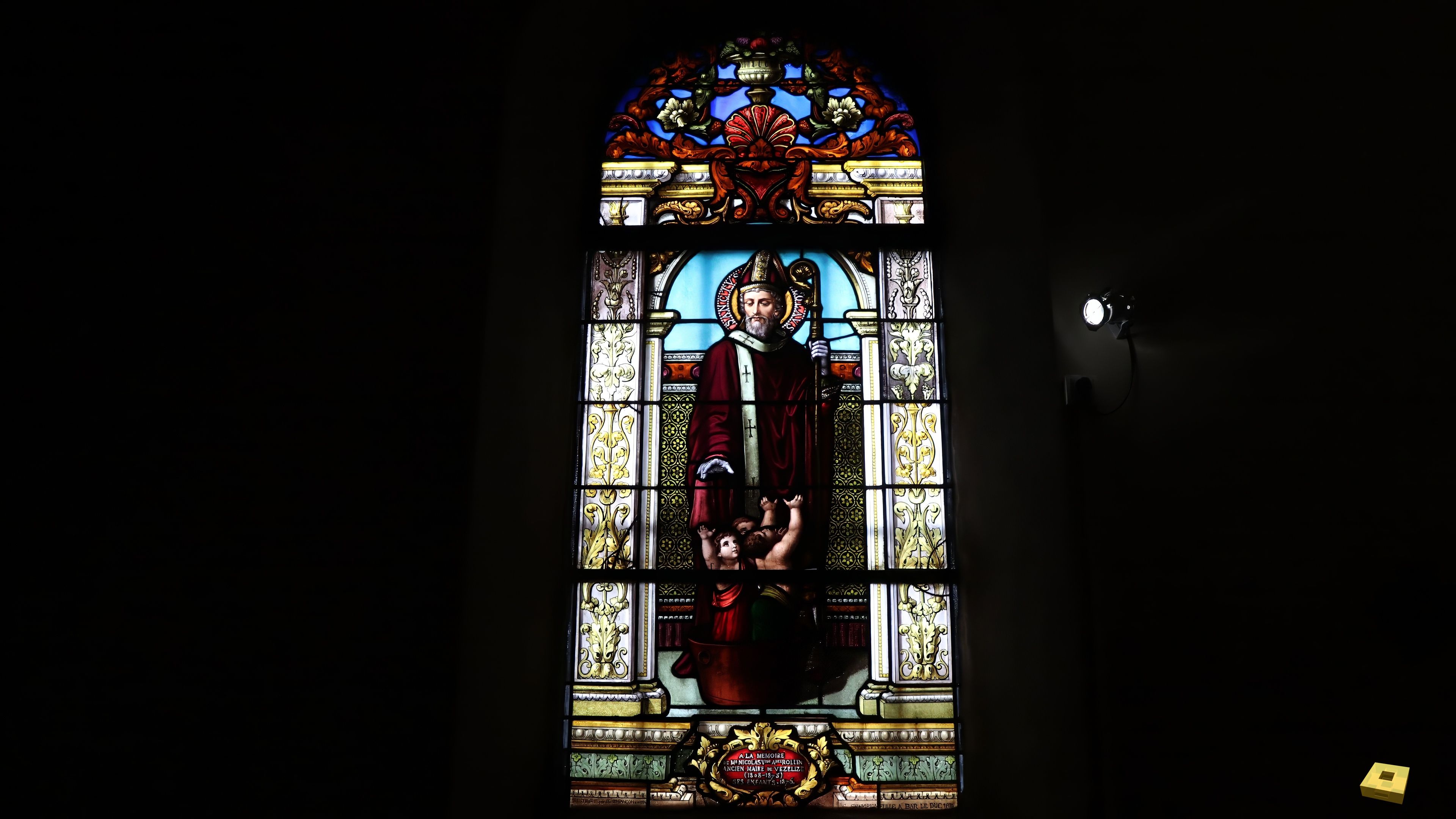
This stained glass window representing Saint Nicholas, installed in 1876, is in memory of Mr. Nicolas V. A. Rollin, former mayor of Vézelize from 1808 to 1875, and his children. 1876.
This stained glass window depicts Saint Nicholas. He is depicted here in a benevolent posture, dressed in characteristic episcopal robes: a deep red chasuble, a richly decorated mitre and a pastoral crozier that he holds in his right hand. At his feet, three children emerge from a tub, an iconographic detail directly linked to one of the most famous legends of the saint. "Sanctus Nicolaus" in the halo is an explicit marker of the saint's identity. The commemorative plaque at the bottom of the window reads: "In memory of Mr. Nicolas Rollin, former mayor of Vézelise (1808-1875), his children, 1876." This inscription bears witness to family devotion and the common practice in the 19th century of financing stained glass windows in memory of the deceased. The choice of Saint Nicholas may reflect a desire for spiritual protection or a personal identification with the saint. The upper part of the window, decorated with plant motifs and warm colours, symbolises heavenly glory. This ornamentation is typical of stained glass windows made by specialist workshops of the 19th century, which combined piety and artistic research.This stained glass window depicts Saint Nicholas. He is depicted here in a benevolent posture, dressed in characteristic episcopal robes: a deep red chasuble, a richly decorated mitre and a pastoral crozier that he holds in his right hand. At his feet, three children emerge from a tub, an iconographic detail directly linked to one of the most famous legends of the saint. "Sanctus Nicolaus" in the halo is an explicit marker of the saint's identity. The commemorative plaque at the bottom of the window reads: "In memory of Mr. Nicolas Rollin, former mayor of Vézelise (1808-1875), his children, 1876." This inscription bears witness to family devotion and the common practice in the 19th century of financing stained glass windows in memory of the deceased. The choice of Saint Nicholas may reflect a desire for spiritual protection or a personal identification with the saint. The upper part of the window, decorated with plant motifs and warm colours, symbolises heavenly glory. This ornamentation is typical of stained glass windows made by specialist workshops of the 19th century, which combined piety and artistic research.
This stained glass window depicts Saint Nicholas. He is depicted here in a benevolent posture, dressed in characteristic episcopal robes: a deep red chasuble, a richly decorated mitre and a pastoral crozier that he holds in his right hand. At his feet, three children emerge from a tub, an iconographic detail directly linked to one of the most famous legends of the saint. "Sanctus Nicolaus" in the halo is an explicit marker of the saint's identity. The commemorative plaque at the bottom of the window reads: "In memory of Mr. Nicolas Rollin, former mayor of Vézelise (1808-1875), his children, 1876." This inscription bears witness to family devotion and the common practice in the 19th century of financing stained glass windows in memory of the deceased. The choice of Saint Nicholas may reflect a desire for spiritual protection or a personal identification with the saint. The upper part of the window, decorated with plant motifs and warm colours, symbolises heavenly glory. This ornamentation is typical of stained glass windows made by specialist workshops of the 19th century, which combined piety and artistic research.


